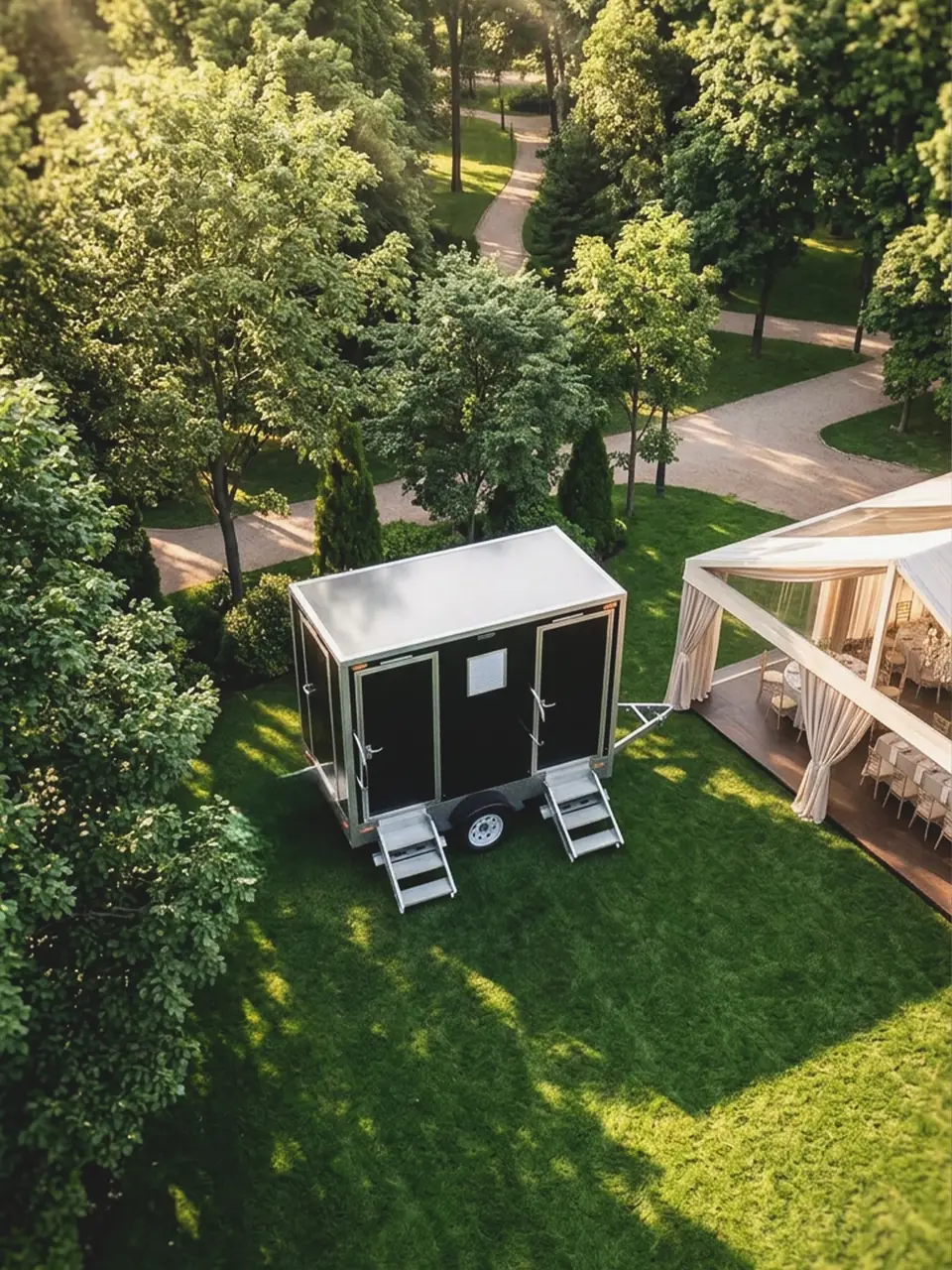
Restroom trailer vs porta potty: what changes for guests?
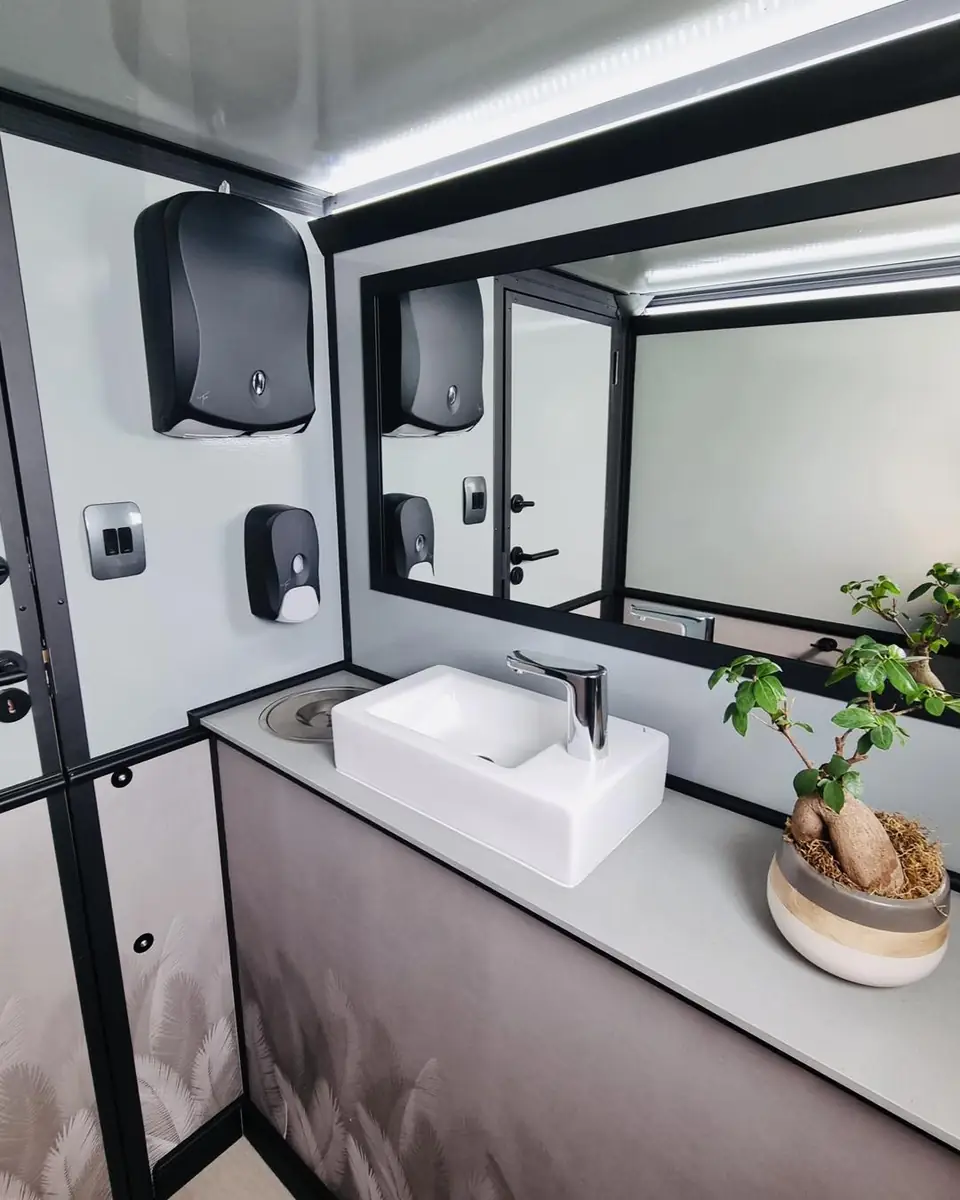
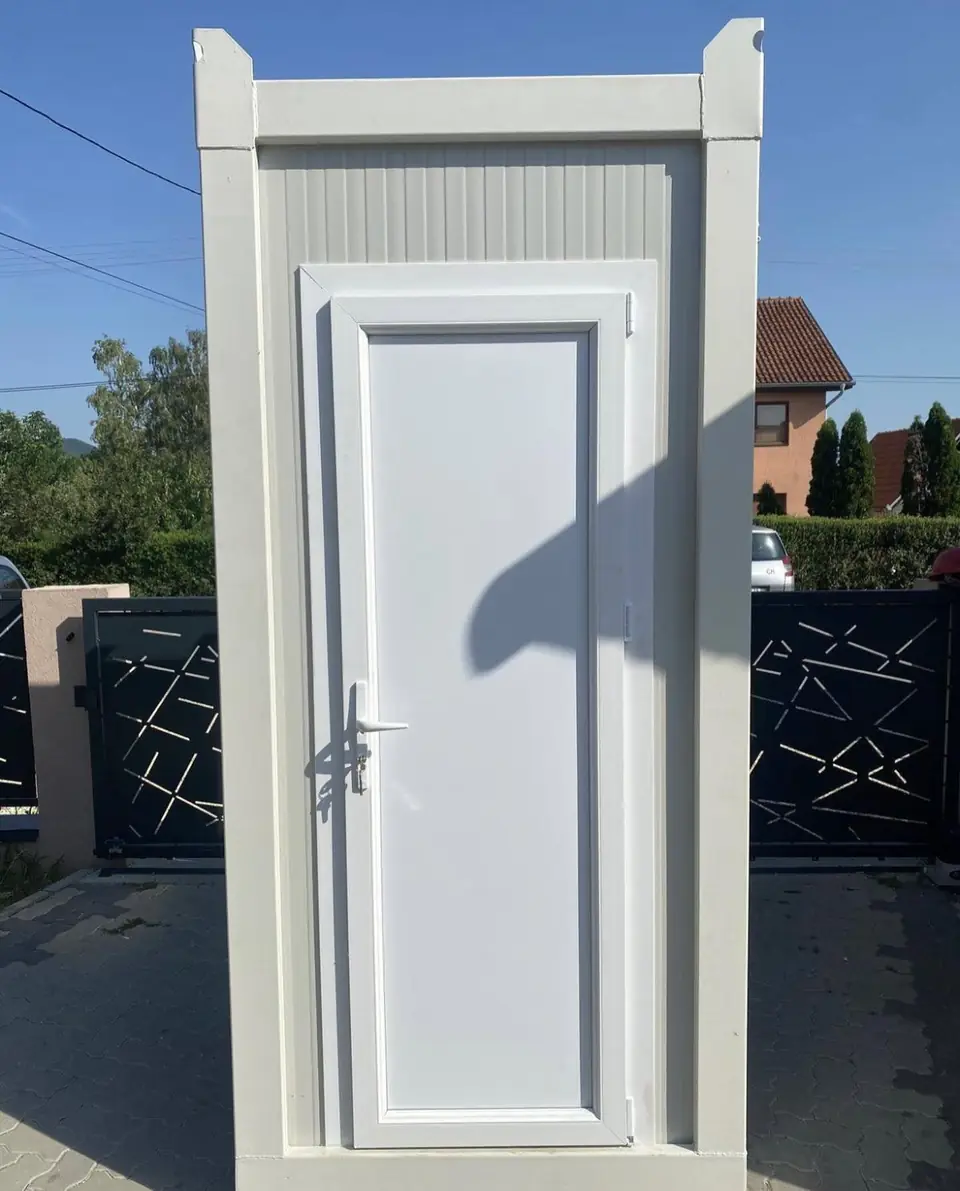
The biggest difference is how the restroom feels inside. A restroom trailer has flushing china toilets, sinks with mirrors, lights and climate control. A standard porta potty has a chemical toilet, a urinal and hand sanitizer. A deluxe flushing unit sits in between, with a freshwater flush and a built-in sink.
| Feature | Standard (PolyJohn PJN3) | Deluxe flushing (PolyJohn Fleet FS3) | 2- or 3-stall restroom trailer |
|---|---|---|---|
| Toilet | Chemical toilet plus urinal | Freshwater flush toilet | Flushing china toilets |
| Hand washing | Hand sanitizer | Built-in sink, soap, towels | Sinks with mirrors |
| Light and climate | Daylight through the roof | Daylight through the roof | Lights and climate control |
| Power needed | None | None | Standard 20-amp outlet or generator |
| Water needed | None | None, carries its own fresh water | Garden hose or fresh water tank |
| Footprint | 43.5 x 47 in | 47 x 47 in | Trailer length plus room to back in |
Guests in formal clothes notice the lights, mirrors and room to turn around in a trailer. On a hot July evening, the air conditioning matters too. For a casual backyard wedding, deluxe units often feel nice enough.
Think about who is coming, too. Older guests, guests in long gowns and parents with small children find a trailer's room and lighting easier. A younger crowd at a daytime cookout reception rarely minds standard units.
What does a restroom trailer need at your venue?
A restroom trailer needs four things. It needs level ground and a standard 20-amp outlet or a generator. It needs a garden-hose water source or a fresh water tank. It also needs a clear path for the truck to back the trailer in. Walk the site with those four items before you pick a trailer.
- Power: A dedicated outdoor outlet within cord reach works best. Ask the venue which outlets are free that night.
- Water: A spigot with a garden hose, or a fresh tank if no spigot is close.
- Ground: Level and firm. Soft grass after rain can sink a trailer wheel.
- Access: Room to back in, with no low branches, wires or tight fence turns.
A generator should sit away from the ceremony so the hum stays out of the vows. Place the trailer close enough to the reception for an easy walk, but out of the photos. See all trailer sizes on the restroom trailer rental page.
Which choice fits your guest count?
Our planning method uses one unit per 50 guests up to four hours and one per 40 up to eight hours. All-day events use one per 30. If the bar is open, add one unit for every five. Treat each trailer stall like one unit. Add standard or deluxe units when the count runs past the trailer's stalls.
| Wedding | Units our method calls for | One way to meet it |
|---|---|---|
| 60 guests, 3 hours, no bar | 2 | 2 deluxe flushing units, or a 2-stall trailer |
| 100 guests, 4 hours, no bar | 2 | 2-stall trailer |
| 120 guests, 4 hours, open bar | 4 | 3-stall trailer plus 1 deluxe unit |
Every cluster also needs a wheelchair-accessible unit. Under 2010 ADA Standards section 213.2, Exception 3, at least 5 percent of the units in each cluster must be accessible, with a minimum of one. Most small trailers have steps, so place a ground-level accessible unit beside the trailer and count it as one of your units.
What should you ask about a reception at the Hyder-Burks pavilion?
Ask the Hyder-Burks pavilion staff how many building restrooms are open for your event. Also ask where outside restrooms may park and when vendors can drop off and pick up. The Tennessee Tech pavilion on Gainesboro Grade has 3.5 acres under one roof. It hosts wedding receptions along with horse shows and expos.
A big open floor makes it easy to invite a large crowd. That crowd can still outgrow the building's restrooms during the dinner rush. Extra units outside the main doors keep lines short.
Share the pavilion's vendor rules with us when you book. Delivery and pickup will be timed to fit those windows.
Other Upper Cumberland reception sites
Church fellowship halls, family farms and lake-house lawns each bring their own limits. A church hall may have plenty of indoor restrooms, while a lake lawn has none. Count the restrooms already on site before you decide how many to add.
Do barn and farm venues work better with units or a trailer?
Barn and farm venues work with either choice, but power decides a lot. Many barns have only a few outlets, and the band and caterer need them too. When no free outlet is near, deluxe flushing units need no hookups at all, or a generator can run the trailer.
Farm lanes are another check. The Cookeville area gets about 59 inches of rain a year, and a grassy field can turn soft the night before. A gravel lane or a mowed, firm strip near the barn gives the truck solid footing.
Compare the no-hookup option on our deluxe flushing porta potty page. Add a hand-wash station near the food when you use standard units.
When should you book wedding restrooms?
Book wedding restrooms as soon as the venue and date are set. Restroom trailers and deluxe units are limited, and May through October weekends fill first. TTU graduation weekends in May and December also compete for the same units. Booking early locks in the trailer size you want.
Wedding units arrive on Friday, or Thursday when needed, and leave on Monday. The trailer can be in place for a Friday rehearsal and stay through a Sunday brunch at no extra-day charge. Every unit arrives cleaned and stocked.
Give us a day-of contact who is not the bride or groom. A planner, parent or venue manager can meet the driver, answer placement questions and point the truck to the right spot. That keeps the couple free on the busiest weekend of their lives.
Planning the full setup? Start with our wedding restroom rental guide.
Questions about trailers vs porta potties
Restroom trailers start at $1,195 for 2 stalls, while standard units start at $165 and flushing units at $295. A generator can power a trailer with no outlet nearby, a ground-level accessible unit still belongs beside any trailer with steps, and Thursday drop-off works for an early rehearsal.
How much does a restroom trailer cost compared to porta potties?
A 2-stall restroom trailer starts at $1,195 per event and a 3-stall starts at $1,595. A standard event unit starts at $165, a deluxe flushing unit with sink at $295, and a wheelchair-accessible unit at $225 per event. Your quote lists every item, with tax added.
Can a restroom trailer run on a generator at our wedding?
A restroom trailer can run on a generator when no outlet is close. The generator powers the lights, fans and climate control all evening. Place the generator away from the ceremony and dinner tables so the noise stays down, and tell us at booking so it is planned.
Do we still need a wheelchair-accessible unit if we rent a trailer?
Plan on one. Most small restroom trailers have steps up to the door, which a wheelchair cannot climb. A ground-level wheelchair-accessible unit beside the trailer covers guests who use wheelchairs or walkers. The unit needs a firm, level 6-by-6-foot spot and a clear path.
Can the trailer arrive in time for our rehearsal?
Wedding restrooms are dropped off on Friday, or Thursday when the rehearsal is earlier. The trailer stays through the weekend and leaves on Monday. Share your rehearsal time and any venue delivery rules when you book, and the drop will be scheduled to fit.