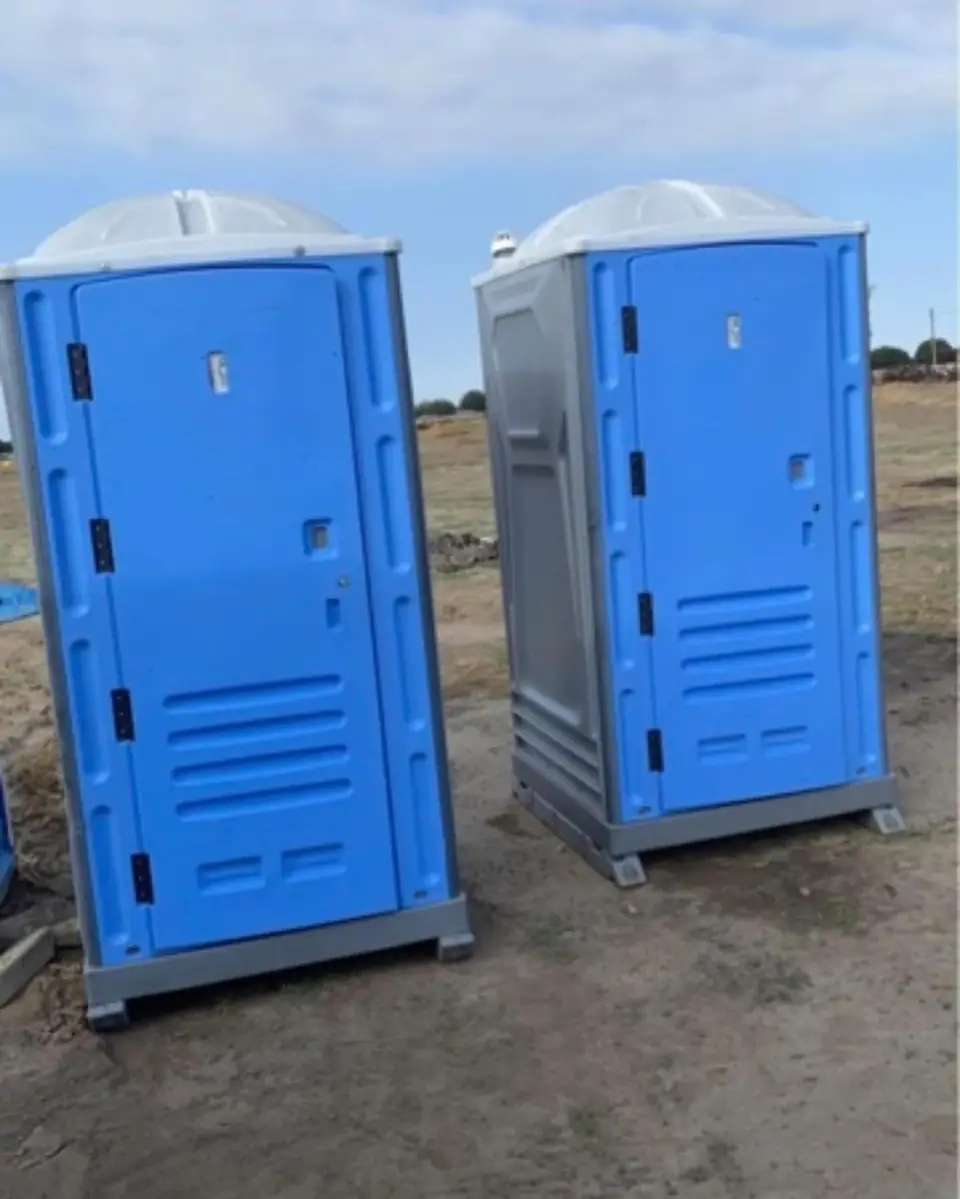
Who enforces job-site toilet rules in Tennessee?
Tennessee runs its own federally approved state plan, called TOSHA, under the Tennessee Department of Labor and Workforce Development. TOSHA covers private employers plus state and local government workers. TOSHA adopts the federal construction standards, so the toilet counts in 29 CFR 1926.51 are the numbers inspectors use on Tennessee sites.
A state plan must be at least as strict as federal OSHA. For job-site toilets, that means the federal table is the rule to plan around. Local codes offices can add their own checks on top of it.
TOSHA inspectors visit after complaints, accidents and planned checks. A missing or overflowing toilet is an easy item for them to write up. Keeping the right count on site, with service records, is the simplest way to stay clear of that citation.
What are the OSHA porta potty requirements in Table D-1?
Table D-1 in 29 CFR 1926.51 sets the minimum toilets by crew size. A site with 20 or fewer workers needs one toilet. At 20 or more, the site needs one toilet seat and one urinal per 40 workers. At 200 or more, the rate drops to one seat and one urinal per 50 workers.
| Workers on site | Minimum under Table D-1 |
|---|---|
| 20 or fewer | 1 toilet |
| 20 or more | 1 toilet seat and 1 urinal per 40 workers |
| 200 or more | 1 toilet seat and 1 urinal per 50 workers |
A standard PolyJohn PJN3 has a seat and a urinal inside. One PJN3 counts as one seat and one urinal toward the table.
The rule has a narrow exception for mobile crews who have transportation ready to reach nearby toilets.
Does OSHA require hand washing on a construction site?
OSHA section 1926.51(f) requires adequate washing facilities where workers handle paint, coatings, herbicides, insecticides or other harmful materials. Those facilities need to be close to the work and supplied with soap and towels. Hand sanitizer inside a toilet helps, but sanitizer is not a washing facility.
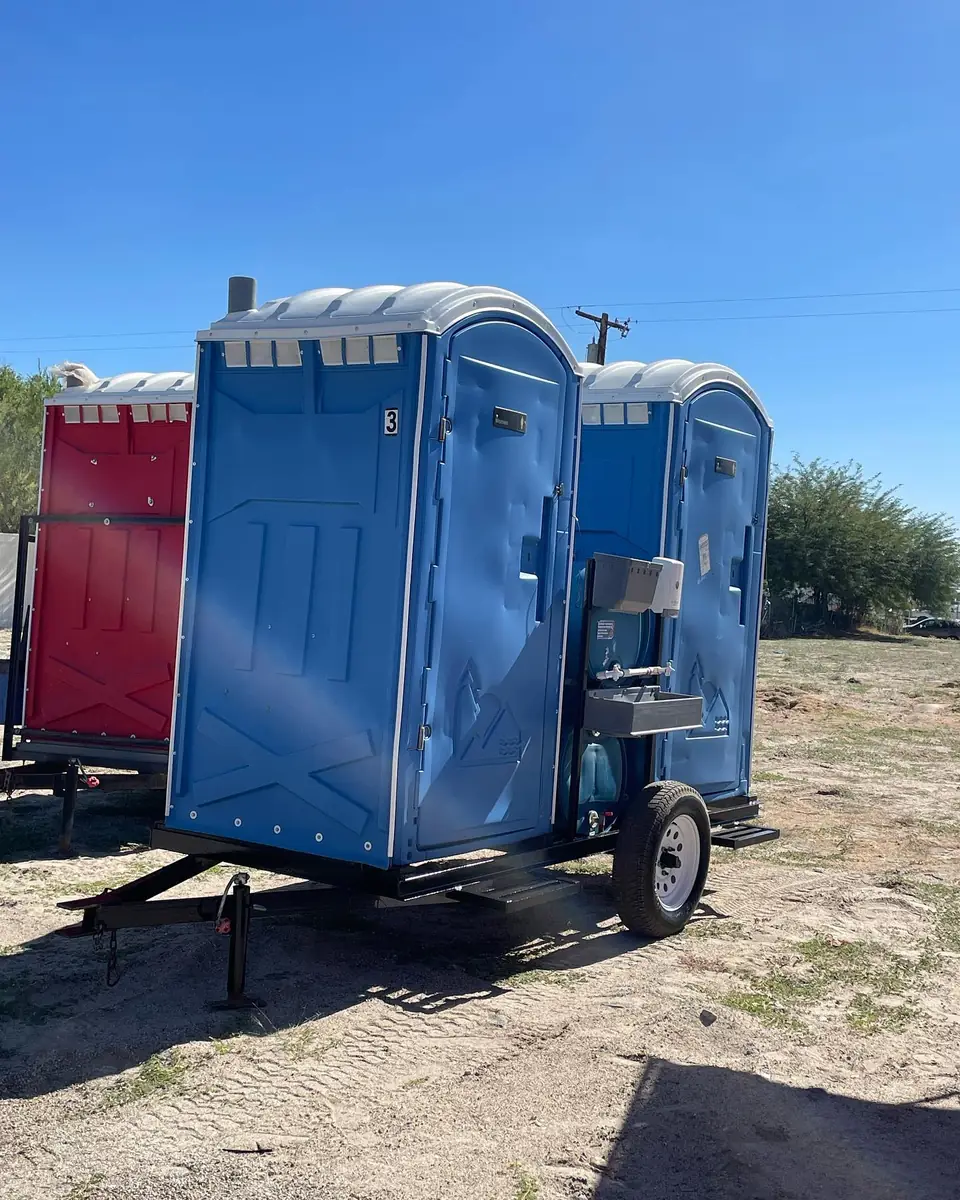
A PolyJohn Bravo BRA2 hand-wash station has two sinks with foot pumps. The 22-gallon fresh tank gives nearly 350 uses per fill, per the maker. Painters, drywall finishers, roofers using sealants and anyone eating lunch on site get the most out of one.
See hand-washing station rentals for sizes and winter options.

What changes on a farm under 29 CFR 1928.110?
Farm field work follows 29 CFR 1928.110, not the construction rule. When 11 or more hand laborers work in a field, the employer must provide one toilet and one hand-wash station per 20 workers. Both must sit within a quarter-mile walk of the crew. Field work of three hours or less, travel included, is exempt.
Tobacco, produce and nursery crews move across fields during the day. A towable porta potty trailer moves with the crew, so the quarter-mile walk stays short. Learn more about farm and field porta potty rentals.
Why plan more units than the legal minimum?
The legal minimum lets one unit serve up to 20 workers, but one unit fills fast at that rate. The industry guideline from ANSI/PSAI Z4.3 is one unit per 10 workers on a 40-hour week. That assumes weekly service. Following it keeps tanks from filling between visits and keeps crews working.
A 60-gallon tank holds roughly 200 to 250 uses before it needs service. Long shifts, Saturday work and summer heat all push that limit sooner. When a site runs past 40 hours a week, add a unit or add an extra service visit.
Watch for warning signs between visits. Low paper, a full tank or crews driving to a gas station all mean the site needs more capacity. Fixing that early costs less than lost work time.
How many units does your crew need? Worked examples
Take your peak crew size, check Table D-1 for the legal floor, then divide the crew by 10 for the practical count. Round up both numbers. The examples below show how that math plays out for common Upper Cumberland crews, from a small framing crew to a busy commercial build.
| Crew | Legal minimum | Our recommendation |
|---|---|---|
| 6 framers, 40 hr/week | 1 unit | 1 unit, weekly service |
| 18 workers, 40 hr/week | 1 unit | 2 units |
| 35 workers, 50 hr/week | 1 seat + 1 urinal (1 unit) | 4 units plus an extra weekly service |
| 45 workers, 40 hr/week | 2 seats + 2 urinals (2 units) | 5 units and a hand-wash station |
| 25 farm hand laborers, full day | 2 toilets + 2 hand-wash stations | 3 toilets + 2 hand-wash stations |
Spread units across a large site so no worker walks far. Put one near the trailer office and one near the busiest work zone.
Where should job-site units go?
Set each unit on firm, level ground that the service truck can reach every week. A gravel pad by the construction entrance works well on most lots. Keep units out of low spots, since the Cookeville area gets about 59 inches of rain a year.
Open sites on ridgetops catch thunderstorm wind. Stake or anchor units there so a gust does not tip them. Face doors away from traffic lanes and loading zones.
What else do local inspectors check before they sign off?
Local codes offices check their own site list on top of OSHA. In Putnam County, that list includes a toilet before inspections, erosion control and a stone construction ramp. A missing item can cost a builder an inspection day. That delay can push back every trade after it. Ask your codes office for its checklist.
Order the unit when you pull the permit, not when the footing is dug.
Our construction porta potty rental includes weekly pumping, cleaning and restocking on a 28-day billing cycle. Long builds can use a monthly porta potty rental with no long contract. Street placement rules are in our Cookeville permit guide.
Questions about OSHA rules
Even a three-person roofing crew needs a toilet under Table D-1, and sanitizer alone does not satisfy the washing rule for crews handling paint or chemicals. Each employer owes its own workers access, though general contractors usually rent for everyone. Job-site units start at $165 per 28-day cycle with weekly service.
Does a three-person roofing crew still need a porta potty?
A crew of three still counts under Table D-1, which calls for at least one toilet for 20 or fewer workers. Relying on the homeowner's bathroom is risky, since that access can end at any time. A unit near the driveway settles the question and keeps the crew from tracking through the house.
Is hand sanitizer enough to meet OSHA rules?
Hand sanitizer alone does not meet the washing rule where workers handle paint, coatings, pesticides or other harmful materials. Section 1926.51(f) calls for real washing facilities with soap and towels near that work. A two-station hand-wash unit with fresh water covers that need on most small and mid-size sites.
Who has to provide the toilet, the general contractor or each sub?
OSHA places the duty on each employer to give its own workers access to a toilet. On most multi-trade sites, the general contractor rents the units for everyone and writes that into the subcontracts. Subs should confirm the arrangement in writing before the first day on site.
What does a job-site porta potty cost per month near Cookeville?
A construction standard unit starts at $165 per 28-day cycle with weekly service included, plus delivery from $50 in Putnam County. Sites outside the county pay a one-time $35, $65 or $95 distance charge instead. Extra service visits start at $65 each. You get an itemized quote before booking, with tax added and no surprise fees.